Home renovation and construction projects can transform your Fort Lauderdale property, but they can also devastate your valuable landscape if proper tree protection isn’t implemented. As certified arborists at Discount Tree Service, we’ve seen countless homeowners face unexpected costs, legal issues, and heartbreak when construction activities damage or kill mature trees that took decades to establish.
The reality is stark: up to 75% of trees die within 2-5 years following construction damage, even when the harm isn’t immediately visible. In Fort Lauderdale’s competitive real estate market, where mature trees can add $15,000-$30,000 to property values, protecting your existing landscape during construction isn’t just good environmental stewardship—it’s smart financial planning.
Why Tree Protection During Construction Is Critical in Fort Lauderdale
Financial Impact
A single mature royal palm or live oak in Fort Lauderdale can be worth $10,000-$25,000 in replacement value and property enhancement. When construction damage kills these specimens, homeowners face not only replacement costs but also years of waiting for new plantings to provide equivalent shade, privacy, and aesthetic value.
Legal Considerations
Fort Lauderdale and Broward County have strict tree protection ordinances. Damaging or removing protected trees without permits can result in fines of $500-$5,000 per tree, plus mandatory replacement requirements that can cost thousands more. Construction-related tree damage doesn’t exempt property owners from these penalties.
Environmental Benefits at Risk
In South Florida’s intense heat and hurricane-prone climate, mature trees provide:
- Energy savings of 20-50% on cooling costs through strategic shading
- Stormwater management crucial during heavy rainfall events
- Hurricane protection when properly maintained mature trees act as windbreaks
- Air quality improvement especially important in urban Fort Lauderdale
How Construction Activities Damage Trees: The Hidden Killers
Understanding how construction harms trees is the first step in prevention. Many homeowners focus only on obvious threats like equipment collisions while missing the subtle damage that proves fatal years later.
Soil Compaction: The Silent Tree Killer
Heavy machinery compacts soil around trees, reducing oxygen availability to roots by up to 90%. In Fort Lauderdale’s sandy soils, this is particularly devastating because:
- Root suffocation occurs when compacted soil prevents gas exchange
- Water infiltration drops dramatically, creating drought stress even with irrigation
- Root growth stops in compacted zones, limiting the tree’s ability to anchor and feed itself
Root Severing and Trenching Damage
Construction often requires digging for utilities, foundations, or drainage. Severing major roots causes:
- Immediate structural instability increasing storm failure risk
- Reduced nutrient uptake leading to gradual decline
- Disease entry points where cut roots become infected
- Long-term anchor loss making trees vulnerable to Fort Lauderdale’s frequent storms
Bark Wounds and Trunk Damage
Equipment contact with tree trunks creates wounds that:
- Girdle the tree if damage wraps around the trunk
- Invite pest infestations particularly problematic with Florida’s aggressive insects
- Compromise structural integrity creating weak points for future failure
- Provide disease entry especially fungal infections common in humid climates
Grade Changes and Soil Disturbance
Altering soil levels around trees disrupts:
- Root zone oxygen when soil is added over existing roots
- Drainage patterns potentially drowning or desiccating root systems
- Root flare exposure essential for tree health and stability
- Soil chemistry affecting nutrient availability
Calculating Tree Protection Zones: The Foundation of Effective Protection
Proper tree protection starts with establishing adequate protection zones. The critical root zone extends far beyond what most people imagine.
Basic Protection Zone Formula
Minimum Protection Radius = Tree Diameter × 1.5 feet
For example:
- 12-inch diameter tree = 18-foot protection radius
- 24-inch diameter tree = 36-foot protection radius
- 36-inch diameter tree = 54-foot protection radius
Enhanced Protection for Valuable Specimens
For irreplaceable trees or those with high value, extend protection zones:
- Premium specimens: Tree diameter × 2 feet
- Stressed or mature trees: Tree diameter × 2.5 feet
- Trees in poor soil: Tree diameter × 3 feet
Fort Lauderdale Specific Adjustments
Local conditions may require larger protection zones:
- Sandy soils: Increase radius by 25% due to extensive lateral root systems
- Hurricane-prone areas: Larger zones preserve anchoring roots critical for storm resistance
- Shallow groundwater: Roots spread wider in areas with high water tables
Multiple Tree Considerations
When protecting tree groups:
- Overlap protection zones to create continuous protected areas
- Consider root grafting common in same-species groupings
- Protect understory plants that support overall ecosystem health
Effective Barrier Installation: Creating Real Protection
Tree protection is only as good as the barriers that enforce it. Proper installation prevents both accidental damage and deliberate shortcuts by construction crews.
Barrier Types and Applications
Chain Link Fencing (Recommended)
- Height: Minimum 6 feet for visibility
- Anchoring: Steel posts driven 18+ inches deep
- Spacing: Posts every 8 feet maximum
- Signage: Clear “Tree Protection Zone – No Entry” signs every 20 feet
Orange Safety Fencing (Temporary Only)
- Suitable only for very short-term protection
- Must be checked and re-secured daily
- Not recommended for projects exceeding one week
Wooden Board Fencing
- Excellent for high-visibility protection
- More expensive but creates professional appearance
- Ideal for upscale neighborhoods in Fort Lauderdale
Installation Best Practices
Pre-Installation Site Preparation
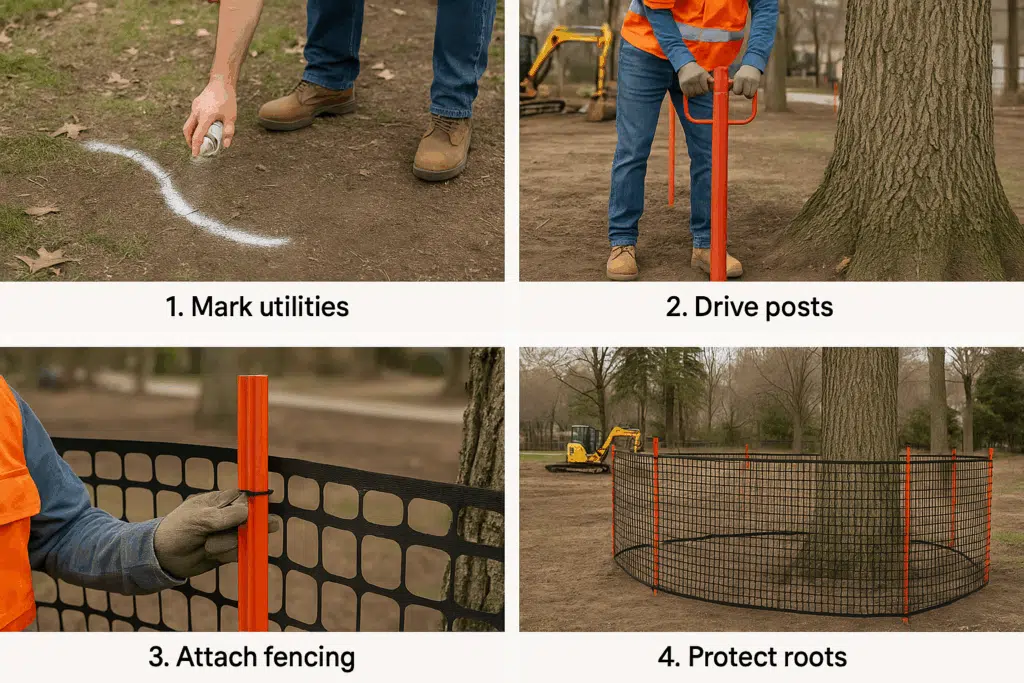
- Mark utilities before driving posts to avoid underground damage
- Document existing conditions with photos and measurements
- Clear minor debris without disturbing soil or roots
- Establish access points for approved maintenance activities
Proper Fence Placement
- Install fencing outside the calculated protection zone
- Ensure no gaps where equipment can squeeze through
- Create designated pathways for necessary access
- Include material storage areas outside protection zones
Maintenance and Monitoring
- Daily inspection during active construction periods
- Immediate repair of any damage or breaches
- Regular cleaning of debris accumulation against fencing
- Documentation of any incidents or concerns
Construction Phase-Specific Protection Strategies
Different construction phases present unique threats to trees, requiring adapted protection strategies throughout the project timeline.
Pre-Construction Phase
Site Preparation (Weeks 1-2)
- Install all tree protection barriers before any equipment arrives
- Conduct baseline tree health assessment and documentation
- Mark all underground utilities to prevent root damage during installation
- Establish material staging areas away from tree protection zones
- Brief all contractors on tree protection requirements and penalties
Demolition Phase
High-Risk Period (Weeks 2-4)
- Dust control: Cover tree canopies during dusty demolition work
- Debris management: Prevent construction debris from accumulating in root zones
- Equipment access: Enforce strict adherence to designated travel routes
- Utility disconnection: Carefully expose and disconnect utilities near trees
Foundation and Excavation Phase
Critical Protection Period (Weeks 4-8)
- Trenching restrictions: No excavation within protection zones without arborist supervision
- Soil stockpiling: Store excavated soil away from tree root zones
- Drainage management: Prevent construction runoff from pooling around trees
- Root encounter protocol: Immediate arborist consultation if roots are exposed
Framing and Construction Phase
Ongoing Vigilance Required (Weeks 8-20)
- Material delivery: Establish delivery zones outside protection areas
- Equipment operation: Maintain strict boundaries for heavy machinery
- Concrete work: Prevent concrete washout near trees (highly alkaline and toxic)
- Temporary utilities: Route electrical and water lines around protection zones
Finishing Phase
Final Protection Measures (Weeks 20-24)
- Landscape preparation: Gradually remove protection as work areas are completed
- Soil restoration: Address any compaction outside original protection zones
- Irrigation installation: Carefully install new watering systems without root damage
- Final cleanup: Remove all construction debris from tree areas
Advanced Protection Strategies for Valuable Specimens
Some trees warrant extraordinary protection measures due to their size, species, location, or sentimental value. These advanced techniques can save irreplaceable specimens.
Root Zone Aeration Systems
For trees requiring nearby construction:
- Air spade excavation to expose roots without damage
- Pneumatic soil fracturing to relieve compaction
- Vertical mulching to improve oxygen infiltration
- Root zone ventilation systems for long-term projects
Specialized Trunk Protection
For trees near construction activity:
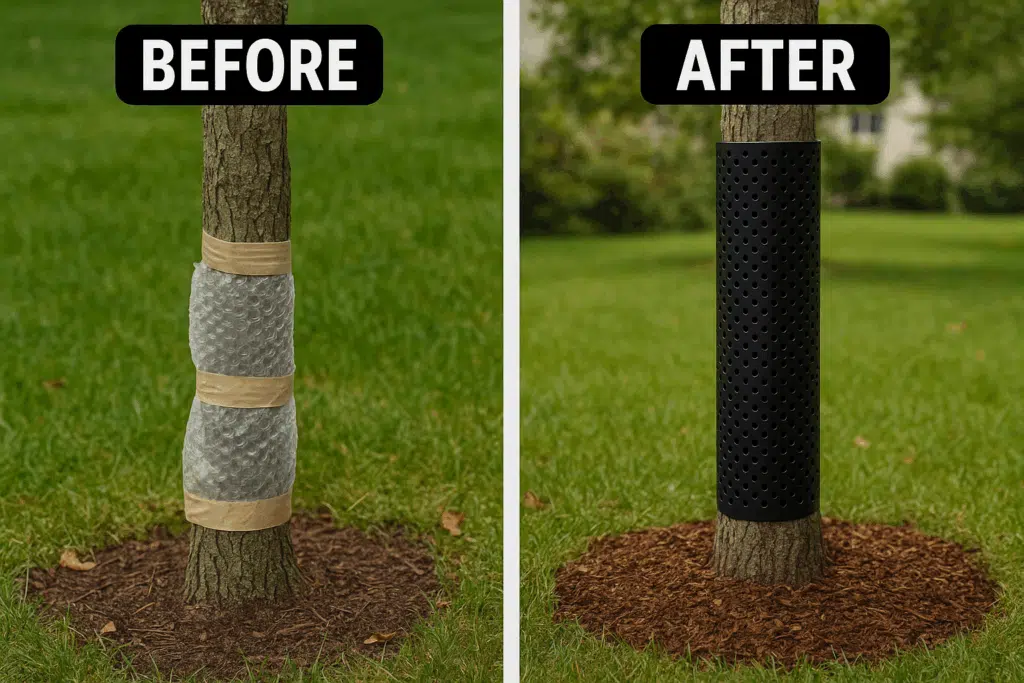
- Padded trunk wrapping using tree-specific materials
- Wooden box protection for extremely valuable specimens
- Flexible barrier systems that accommodate tree growth
- Impact-resistant shields for high-traffic areas
Canopy Protection Measures
Protecting above-ground portions:
- Branch supports for trees with extended limbs over work areas
- Canopy netting to prevent debris accumulation
- Pruning modifications to reduce construction conflicts while maintaining health
- Temporary irrigation for trees stressed by altered drainage
Soil Modification and Enhancement
Improving growing conditions:
- Soil decompaction using specialized equipment
- Organic matter addition to improve soil structure
- Mycorrhizal inoculation to enhance root function
- Drainage improvements to prevent waterlogging
Environmental Control
Managing the construction environment:
- Dust suppression systems to prevent leaf coating
- Noise barriers to reduce stress on wildlife using trees
- Chemical isolation preventing runoff of harmful substances
- Microclimate protection maintaining humidity and temperature
Documentation and Contractor Management: Your Legal Shield
Proper documentation protects you from contractor claims of pre-existing damage and ensures accountability throughout the construction process.
Pre-Construction Documentation
Comprehensive Tree Assessment
- Professional evaluation by certified arborist documenting current health
- Detailed photography of trunk, canopy, and root zone from multiple angles
- Measurements and mapping showing exact tree locations and protection zones
- Health ratings using standardized assessment criteria
- Soil condition analysis documenting existing compaction or drainage issues
Written Protection Plan Create a detailed plan including:
- Specific protection measures for each tree
- Equipment restrictions and approved access routes
- Emergency contact information for tree-related issues
- Monitoring schedule and responsibility assignments
- Remediation procedures if damage occurs
Contract Language That Protects Trees
Essential Contract Clauses Include these provisions in all construction contracts:
“Contractor shall protect all existing trees as specified in the attached Tree Protection Plan. Any damage to protected trees, including but not limited to soil compaction, root damage, trunk wounds, or branch breakage, shall be the contractor’s responsibility. Contractor agrees to pay for professional assessment and treatment of any tree damage, including replacement costs if trees cannot be saved.”
“Tree protection barriers shall remain in place and intact throughout the project. Contractor shall not remove, relocate, or modify tree protection without written approval from the property owner and consulting arborist.”
“All construction personnel shall be briefed on tree protection requirements before beginning work. Violations of tree protection protocols may result in work stoppage and contractor liability for damages.”
Ongoing Monitoring and Documentation
Weekly Inspection Reports
- Barrier condition assessment with photographic evidence
- Tree health observations noting any stress indicators
- Soil condition monitoring for compaction or contamination
- Compliance issues documenting any protection violations
- Corrective actions taken to address problems
Incident Documentation If damage occurs:
- Immediate photography from multiple angles showing extent of damage
- Written incident report including date, time, and circumstances
- Contractor notification in writing with copy retained
- Professional assessment by certified arborist within 48 hours
- Treatment plan development and implementation
Post-Construction Assessment
Final Tree Evaluation
- Comprehensive health assessment comparing to pre-construction baseline
- Root zone inspection checking for hidden damage
- Soil condition analysis documenting any ongoing issues
- Treatment recommendations for stress recovery
- Long-term monitoring plan to track tree recovery
Fort Lauderdale Specific Considerations
Fort Lauderdale’s unique climate, soil conditions, and regulations create specific challenges for tree protection during construction.
Local Climate Factors
Hurricane Season Considerations
- Construction timing: Avoid major tree stress during June-November hurricane season
- Storm preparation: Ensure protection barriers can withstand high winds
- Emergency protocols: Plan for rapid barrier removal if hurricane threatens
- Recovery planning: Stressed trees are more vulnerable to storm damage
Heat and Humidity Stress
- Increased water needs: Construction stress compounds heat stress
- Fungal disease risk: Wounds and stress increase susceptibility to tropical diseases
- Rapid deterioration: Tree decline accelerates in Fort Lauderdale’s climate
- Extended recovery: Trees take longer to recover in stressful conditions
Soil and Environmental Challenges
Sandy Soil Considerations
- Rapid drainage: Compaction effects are more severe in sandy soils
- Root spread: Trees develop extensive lateral root systems requiring larger protection zones
- Nutrient leaching: Construction disruption affects already limited nutrient retention
- Stability concerns: Damaged root systems in sand provide less anchoring
Saltwater Intrusion
- Coastal properties: Salt exposure from construction dust compounds existing stress
- Irrigation quality: Ensure construction water sources don’t increase salinity
- Drainage impacts: Altered drainage can worsen saltwater intrusion effects
Local Regulations and Permits
Broward County Tree Ordinances
- Protected species: Special requirements for native trees like live oaks and gumbo limbos
- Size thresholds: Trees over certain diameters require protection permits
- Replacement requirements: Damaged protected trees must be replaced at specific ratios
- Penalty structure: Fines for tree damage can reach $5,000 per tree
Fort Lauderdale Specific Rules
- Historic districts: Additional protection requirements in designated areas
- Waterfront properties: Enhanced protection for trees providing erosion control
- Public right-of-way: Special permits required for work near street trees
- HOA considerations: Many neighborhoods have additional tree protection standards
Recommended Local Tree Species Protection
High-Value Native Species
- Live Oaks: Require maximum protection zones due to extensive root systems
- Gumbo Limbos: Sensitive to soil disturbance and mechanical damage
- Sabal Palms: State tree with special protection status
- Mahogany Trees: Slow-growing and difficult to replace
Common Landscape Trees
- Royal Palms: Iconic Fort Lauderdale species requiring careful protection
- Ficus Species: Popular but sensitive to root disturbance
- Coconut Palms: Valuable for coastal properties but hurricane-vulnerable if damaged
When to Call Professional Tree Protection Services
While homeowners can implement basic protection measures, certain situations require professional expertise to prevent costly mistakes.
Situations Requiring Professional Assessment
High-Value Tree Scenarios
- Trees worth more than $5,000 in replacement value
- Rare or specimen trees that cannot be easily replaced
- Trees providing critical functions (storm protection, privacy, cooling)
- Historic or heritage trees with sentimental value
Complex Construction Projects
- Major renovations affecting more than 50% of the property
- Foundation work or significant excavation near trees
- Utility installation requiring trenching through root zones
- Multi-story additions with extensive equipment requirements
Challenging Site Conditions
- Poor soil drainage or compaction issues
- Trees already showing stress or decline
- Previous construction damage requiring remediation
- Tight spaces with limited equipment access options
Professional Services Available
Pre-Construction Planning At Discount Tree Service, our certified arborists provide:
- Comprehensive tree assessment and protection zone mapping
- Custom protection plans tailored to your specific project
- Contractor education ensuring your team understands requirements
- Permit assistance for protected species in Fort Lauderdale
During Construction Monitoring
- Regular inspection services to ensure protection compliance
- Emergency response if tree damage occurs
- Soil remediation to address compaction or contamination
- Stress treatment for trees showing construction-related decline
Post-Construction Recovery
- Damage assessment and treatment planning
- Soil decompaction and root zone restoration
- Nutritional therapy to aid tree recovery
- Long-term monitoring to ensure successful rehabilitation
Cost-Benefit Analysis of Professional Protection
Investment in Protection Professional tree protection services typically cost:
- Assessment and planning: $300-$800 per property
- Monitoring services: $150-$300 per visit
- Remediation work: $500-$2,000 per tree depending on damage
Cost of Tree Loss Without protection, homeowners risk:
- Replacement costs: $5,000-$25,000 per mature tree
- Property value loss: $10,000-$50,000 for significant landscape damage
- Legal penalties: $500-$5,000 per tree in municipal fines
- Increased cooling costs: $200-$800 annually per lost shade tree
Emergency Response: When Things Go Wrong
Despite best efforts, construction accidents can damage trees. Quick, appropriate response can often save trees that might otherwise be lost.
Immediate Response Protocol
First 24 Hours
- Stop all work in the affected area immediately
- Document damage with detailed photographs from multiple angles
- Contact certified arborist for emergency assessment
- Notify insurance company if coverage may apply
- Stabilize the situation to prevent additional damage
Critical Assessment Questions
- How much of the root system was damaged?
- Are there structural stability concerns?
- What percentage of the canopy was affected?
- Is the tree’s vascular system compromised?
- Are there signs of pest or disease entry?
Treatment Options for Damaged Trees
Root Damage Recovery
- Root pruning: Clean cuts to damaged roots to prevent decay
- Soil amendment: Improve growing conditions around remaining roots
- Mycorrhizal treatment: Enhance root function and nutrient uptake
- Gradual canopy reduction: Balance reduced root capacity with water needs
Trunk and Branch Damage
- Proper wound care: Clean cuts and appropriate treatments
- Structural support: Cables or braces if stability is compromised
- Canopy management: Strategic pruning to reduce stress
- Pest prevention: Treatments to prevent insect invasion of wounds
Soil Compaction Remediation
- Air spade decompaction: Pneumatic soil loosening around roots
- Vertical mulching: Creating channels for air and water infiltration
- Organic matter incorporation: Improving soil structure and biology
- Drainage correction: Addressing water movement issues
When Professional Help Is Essential
Contact Discount Tree Service immediately if:
- Major root damage has occurred (more than 25% of root zone affected)
- Trunk wounds extend more than one-third around the circumference
- Tree is leaning or showing signs of instability
- Multiple damage types have occurred simultaneously
- High-value specimens are involved
Our emergency response team is available 24/7 at (954) 289-2150 to assess damage and implement immediate protective measures.
Preventive Maintenance: Preparing Trees for Construction
Trees in better health before construction begins have significantly higher survival rates and faster recovery times.
Pre-Construction Tree Health Optimization
Nutritional Support (3-6 Months Before)
- Soil testing to identify nutrient deficiencies
- Targeted fertilization to build tree reserves
- Mycorrhizal inoculation to enhance root function
- Organic matter addition to improve soil biology
Structural Preparation
- Corrective pruning to remove weak or problematic branches
- Crown cleaning to eliminate dead, diseased, or damaged wood
- Weight reduction for trees with heavy limbs over construction areas
- Cabling or bracing for trees with structural weaknesses
Root System Enhancement
- Deep watering to encourage deeper root development
- Soil decompaction to improve root penetration
- Root zone expansion through careful cultivation
- Drainage improvements to optimize growing conditions
Species-Specific Preparation Strategies
Live Oaks
- Focus on maintaining natural form while reducing wind sail
- Address any oak wilt concerns before construction stress
- Ensure adequate root zone protection due to extensive lateral roots
Palm Trees
- Avoid “hurricane cuts” that weaken trees before construction
- Ensure proper nutrition, especially potassium and manganese
- Address any lethal bronzing disease concerns proactively
Ficus Species
- Reduce canopy density to minimize stress during construction
- Address any scale or whitefly infestations before project begins
- Consider root barrier installation if aggressive root systems threaten construction
Long-Term Recovery and Monitoring
Tree protection doesn’t end when construction is complete. Monitoring and supporting tree recovery ensures your investment in protection pays long-term dividends.
Post-Construction Recovery Timeline
Immediate Recovery (0-6 Months)
- Stress monitoring: Watch for signs of construction-related decline
- Supplemental watering: Support trees adjusting to altered conditions
- Pest surveillance: Stressed trees are more vulnerable to infestations
- Soil restoration: Continue improving growing conditions
Short-Term Recovery (6-24 Months)
- Growth assessment: Monitor new growth patterns and vigor
- Structural evaluation: Check for delayed stability issues
- Health optimization: Continue nutritional and cultural support
- Corrective treatments: Address any emerging problems promptly
Long-Term Monitoring (2-5 Years)
- Annual health assessments: Professional evaluation of recovery progress
- Structural integrity: Ongoing monitoring for delayed failure risks
- Environmental adaptation: Helping trees adjust to changed site conditions
- Preventive care: Maintaining optimal health for future challenges
Success Indicators
Healthy Recovery Signs
- New growth: Vigorous shoot and leaf development
- Good color: Normal foliage color and density
- Structural stability: No signs of lean or instability
- Pest resistance: Ability to resist normal pest pressures
Warning Signs Requiring Attention
- Decline symptoms: Yellowing, wilting, or premature leaf drop
- Pest problems: Increased susceptibility to insects or diseases
- Structural issues: Developing lean, cracks, or instability
- Growth abnormalities: Unusual growth patterns or vigor loss
Ongoing Care Recommendations
Annual Maintenance
- Professional inspection by certified arborist
- Nutritional assessment and targeted fertilization
- Pruning as needed to maintain health and structure
- Pest and disease monitoring with preventive treatments
Environmental Support
- Mulching maintenance to conserve moisture and improve soil
- Irrigation adjustment based on tree recovery and weather patterns
- Soil improvement through ongoing organic matter addition
- Protection from future damage through landscape planning
Protecting Your Fort Lauderdale Landscape Investment
Protecting trees during construction and renovation projects requires planning, vigilance, and often professional expertise. In Fort Lauderdale’s unique environment, where mature trees provide essential cooling, storm protection, and property value, the cost of proper protection is minimal compared to the devastating expense of tree loss.
The key elements of successful tree protection include:
- Early planning and professional assessment before construction begins
- Proper protection zones calculated for local soil and climate conditions
- Effective barriers that actually prevent damage rather than just marking areas
- Phase-specific strategies adapted to different construction activities
- Professional monitoring to ensure compliance and early problem detection
- Comprehensive documentation to protect against contractor claims
- Emergency response planning for when accidents occur despite precautions
Remember that tree protection is an investment, not an expense. The cost of professional tree protection services is typically 5-10% of the value of the trees being protected, while the cost of tree replacement can exceed the value of many construction projects.
Your Next Steps
If you’re planning a construction or renovation project in Fort Lauderdale:
- Schedule a pre-construction tree assessment with our certified arborists
- Develop a comprehensive protection plan tailored to your specific project
- Include tree protection requirements in all contractor agreements
- Implement protection measures before any construction equipment arrives
- Monitor compliance throughout the construction process
- Plan for post-construction recovery and long-term tree health
Don’t let construction damage destroy decades of tree growth and thousands of dollars in landscape value. Contact Discount Tree Service today at (954) 289-2150 to discuss your tree protection needs.
Our team of certified arborists has over 25 years of experience protecting Fort Lauderdale’s urban forest. We understand the unique challenges of construction in South Florida and can help ensure your valuable trees survive and thrive through any building project.